

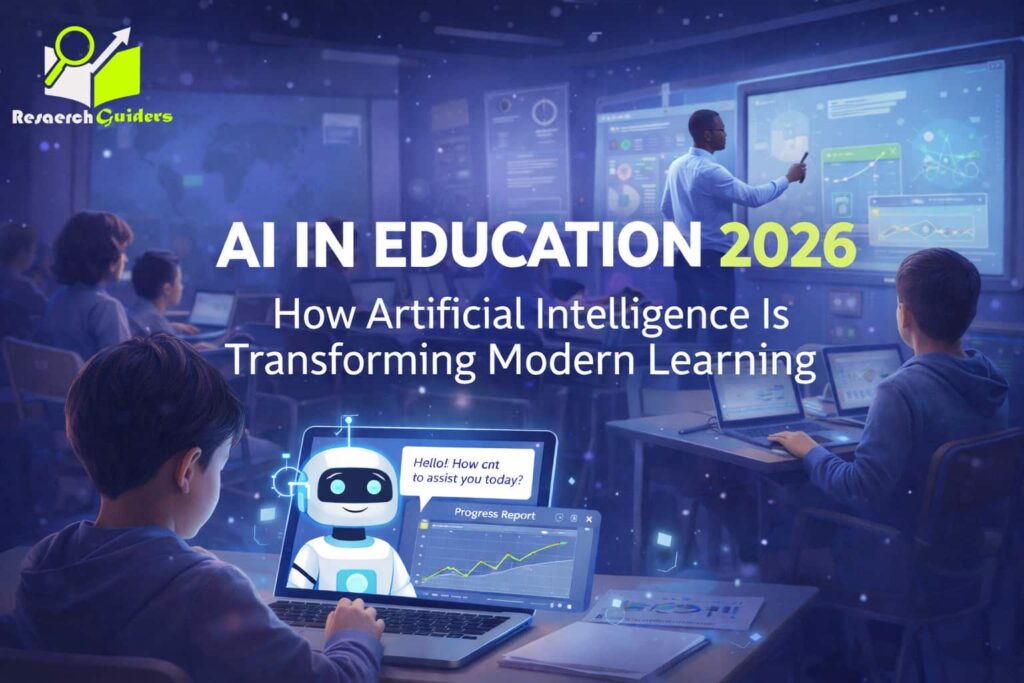
The introduction of AI in Education is the most powerful movement that education has ever experienced, and it is transforming education in a very significant way. What could be described as a futuristic concept a few years ago is now a reality that continues to transform the world in terms of classrooms, online platforms, and learning systems. By 2026, the use of artificial intelligence will no longer be a choice but rather a mandatory aspect of education in the present day.
Learning processes, teaching methods, and organizational functions of the institutions have greatly altered. Smart and data-based systems that understand student behavior and personalize the learning process, and enhance academic performance, are replacing traditional teaching methods. This change is not a transitional one, but this is the future of education.
In this paper, we will discuss how the concept of artificial intelligence in education is transforming the learning process in 2026, why it is more significant than ever, and how this technological revolution can change the lives of students and institutions.
Understanding AI in Education and Its Growing Importance
AI in Education can be defined as the application of artificial intelligence technologies, such as machine learning, data analytics, and automation, to enhance the teaching and learning process. Such systems examine the performance of students, learning behaviors, and their level of engagement to create personalized learning experiences.
The education to be followed in the past years was a one-size-fits-all. All the students received equal treatment in terms of the mode of teaching, no matter their learning pace and level of understanding. This model, however, did not take into consideration individual learning needs. This issue has been largely resolved with the advent of AI-powered education.
By this time, AI is fully embedded in the education system (2026). With the smart classrooms and the online learning platforms, artificial intelligence can assist teachers in providing a better curriculum and help students reach better scores. The strength of AI to handle lots of data enables it to detect the gaps in learning and propose modifications instantly.
The growing need for flexible education has also increased the demand for online learning and academic support, where students rely on expert-guided resources to enhance their academic performance.
How AI in Education Is Transforming Learning in 2026
The effects of AI in education in 2026 can be observed in all the learning levels. Artificial intelligence is transforming knowledge delivery and consumption from primary school to higher education and professional training.
Intelligent platforms analyze students’ performance and develop customized learning paths. These systems recognize the strengths and weaknesses and hence make changes in lessons. This assists the students to concentrate more on aspects they require to improve on, and not to spend time on topics that they are familiar with.
The other significant change is the automation in education. Because it used to take hours to complete the tasks previously used to spent the time on grading, evaluating performance, and tracking progress, it now takes seconds. This enables the teachers to pay more attention to mentoring and guiding students rather than doing work in administration.
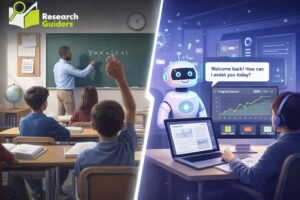
Another area that is currently becoming crucial in enhancing student engagement is the use of artificial intelligence in education in 2026. The interactive material, intelligent quizzes, and adaptive learning environments will ensure the students are motivated and engaged in their education.
Key Benefits of AI in Education
How AI Improves Learning Outcomes
- Individualized learning depends on the behavior of the students.
- Swifter and more precise evaluation tools.
- Immediate response and assistance to students to improve rapidly.
- Less learning distance with intelligent content delivery.
These AI benefits in education 2026 ensure that learning becomes more personalized, data-driven, and outcome-focused for every student. Students also do not feel lost in the system, but teachers are more equipped to meet the needs of individuals.
Role of AI in Online and Digital Education
Online learning has been witnessing colossal development, and AI in learning has been a key factor in ensuring that it is successful. Online education would not be able to provide equal quality compared to traditional classrooms without the help of artificial intelligence.
AI-powered platforms now offer:
- Smart course recommendations.
- Automation of progress tracking.
- Individualized learning plans.
- On-the-fly performance management.
Owing to these characteristics, the concept of artificial intelligence in education has made the online study more organized, credible, and outcome-driven. Students are now able to learn at their own speed without having to sacrifice quality.

How AI Supports Teachers and Institutions
AI is not only helpful to the students, but is also useful to the teachers and educational institutions. The workload of teachers is also usually high, including planning lessons, evaluating, and grading students. The problem of this load is mitigated in AI by automating repetitive procedures.
AI is applied in institutions to analyze student data, predict their academic performance, and enhance curriculum design. This can enable them to make sound decisions out on facts and not suppositions.
Through the use of AI in education, educators will be able to work more on creativity, mentoring, and student engagement rather than administration.
Challenges of AI in Education
Along with the numerous benefits, there are several issues with AI in education. Among the primary issues is the issue of privacy of data. The AI systems accumulate data on students, which should be safeguarded to avoid abuse
Over-dependence on technology is also another challenge. Even though AI improves learning, it is not to be used instead of human interaction as a whole. Education is yet to be dominated by emotional intelligence, creativity, and human guidance, where machines are not able to substitute teachers completely.
Furthermore, the application of AI solutions involves infrastructure and training investments, which might be a challenge for certain institutions.
Future of AI in Education Beyond 2026
The future of artificial intelligence in education is very promising. Within several years, AI will get even more developed, and it will provide such capabilities as:
- AI-powered virtual tutors
- Student skills-based career guidance.
- Adaptive examinations
- The rhyme with virtual and augmented reality.
There will be more personalized, flexible, and efficient education than ever. The students will be guided according to their goals, abilities, and aspirations in their careers.
Why Students Must Adapt to AI-Based Learning
With the current competitive world, students who are able to adjust to the AI-powered education have been found to have a substantial advantage over others. Learning with the help of AI is beneficial to teach critical thinking, problem-solving skills, and digital literacy, which are needed in the future in workplace.
With the ever-changing nature of industries, employers are now favoring those people who are not afraid of technology as well as learning new systems. Through the adoption of AI in education, students will be ready to succeed in the long run.
To succeed in AI-driven education, students must rely on reliable academic guidance and learning support that helps them adapt to modern learning systems and digital education models.
Conclusion
By 2026, AI in Education is not a trend anymore, but a need. AI has turned learning into a personalized and efficient, and accessible approach. From smart classrooms to online learning programs, AI has since become a very necessary component of the contemporary education system.
Those students, teachers, and institutions that will adjust to this change will succeed in the digital era. Those who disregard it end up lagging. Intelligent, data-driven, and artificial intelligence-driven education is the future of education.