

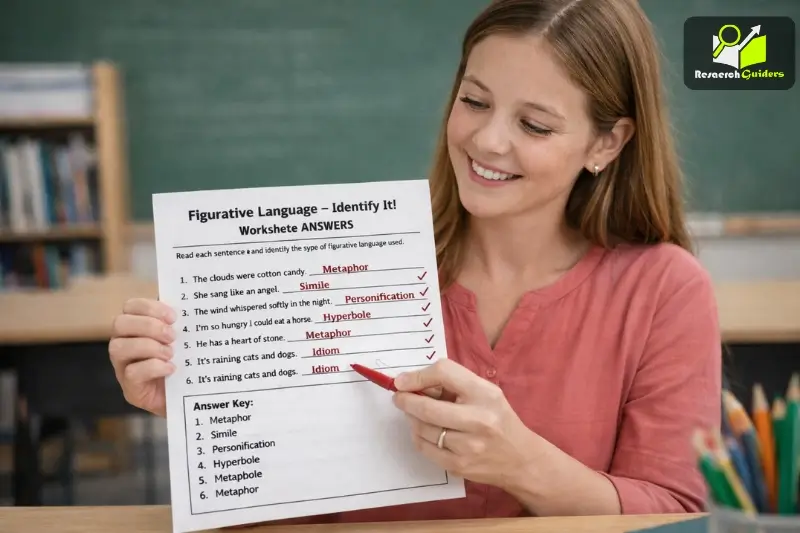
Figurative language is a foundational element of English literacy. Students are expected, from elementary classes to advanced literature courses, to understand and identify different figurative devices, such as metaphor, simile, personification, or hyperbole. Many learners have difficulty completing worksheets on identification because they only memorize the definitions and fail to see patterns in sentences. All figurative language-identify it worksheet answers are carefully written for clarity, structure and practical understanding.
This article does not simply list short answers. It explains how you can think through each sentence. It also explains how you can recognize clues and avoid common mistakes. This 2026 guide is a great resource for students preparing for school, parents helping at home or teachers looking for easy-to understand explanations.
Understanding Figurative Language in Depth
Figurative language is used to describe expressions that go beyond the literal meaning. Writers and speakers create images and emotional impact by using creative comparisons, exaggerations, and symbolic language.
When someone says, “The test was like a nightmare,” it is not an actual dream. They are actually expressing stress or difficulty. The first step to solving all figurative language worksheet answers is to recognize the difference between literal meaning and figurative.
Students need to learn how to analyze the true meaning of a sentence. The literal interpretation of worksheets often leads to wrong answers, while a deeper interpretation can lead to the correct identification.
Why Identification Worksheets are Important
They are more than just random exercises in the classroom. Students are taught to:
- Literary devices: Recognize them in context
- Improve reading comprehension
- Develop an analytical mind
- Prepare for standardised assessments
Students who practice identifying figurative words improve their ability in interpreting poetry, short stories and novels. They also become better at interpreting speeches. Mastering all figurative languages – identify it answers will help you build a solid academic foundation for your higher-grade English coursework.
Common Types of Figurative Language – Explained
Most worksheets are centered around a particular set of devices. Here is a paragraph-formatted explanation of the major types.
Simile
In a simile, two things are compared using words like “like” or as. For example, “She runs just like the wind”, compares wind speed with “like”. If you see the words “like” or as” in worksheets connecting two different things, then it is likely that the answer will be similar.
Metaphor
The metaphor compares the two things, but it does not use words like “like” or as. For example, the phrase “Time is a Thief” compares time directly to a burglar, implying that it steals precious moments. Checking for comparison words can help students distinguish between similes, metaphors, and other types of language. It is important to distinguish between the two when completing all figurative language worksheet answers.
Personification
Personification is the process of giving human qualities to objects or ideas that are not humans. Personification is used in sentences like “The wind whispered through the trees. Wind cannot actually whisper, so this sentence uses personification. The key is to identify human actions that are applied to nonhuman subjects.
Hyperbole
Hyperbole is a deliberate exaggeration to emphasize. Exaggerating frequency, for example, “I’ve told you a thousand times,” is hyperbole. Impossibility is the key. Hyperbole is more likely to be used if the statement cannot be realistically achieved.
Idiom
A phrase that has a different meaning than its literal words is an idiom. Breaking the ice is not a physical act, but a phrase that means to initiate a conversation. Idioms are often used in worksheets that test deeper comprehension.
Alliteration
Alliteration is the repetition of a consonant beginning sound in words that are close to each other, like “Peter Piper was picked”. It’s more about sound patterns than comparison.
Quick Comparison Table for Revision
| The Sentence Example | The Device | Key Clue |
| As busy as bees | Simile | Uses of “as” |
| The world is your stage | Metaphor | Direct Comparison |
| The sun was shining down | Personification | Human trait |
| I’m about to starve to death | Hyperbole | Extreme exaggeration |
| Spill the beans | Idiom | Non-literal phrase |
This table allows students to quickly review patterns and then proceed with the worksheets.
Sample Worksheet Practice with Explanations
Let’s analyze real-life worksheet sentences in detail.
Answer: Metaphor. Sentence: Her voice was music to her ears. This sentence compares music and voice without using the words “like” or ‘as’.
Sentence: He fought like a Lion.
Answer: Simile. The word “like”, which means comparison.
Sentence: The alarm clock screamed at me.
Answer: Personification. Clocks do not scream.
Sentence: I have a mountainous amount of homework.
Answer: Hyperbole. The mountain of homework is overstated.
“Hit the books.”
Answer: Idiom. It is to read, not physically to strike a book.
By practicing such structured examples, you can improve your recognition skills and decrease mistakes.
Common mistakes students make
Even the best students can make mistakes when they rush through or rely solely on memorization. Here are some common mistakes to avoid.
- Every comparison is a metaphor
- Avoiding signal words such as “like” and “as”
- Strong description and exaggeration are not the same thing
- Take idioms literally
Identification worksheet answers improve accuracy by understanding the structure instead of memorizing definitions.
How to improve identification skills
Consistent practice and analysis are essential for improvement. Students should ask students to read sentences slowly, and then ask them three questions.
This statement is either literal or imaginative.
What is a good comparison word?
Are there signs of human intervention or exaggeration on objects?
Understanding is also strengthened by writing personal examples. Create original metaphors and similes to build a deeper understanding.
Read Also: School Holidays Tasmania
The Advanced Figurative Language for Higher Grades
Worksheets can include imagery, symbolism, and irony as students advance academically. When an object is used to represent a deeper meaning, it’s called symbolism. Images are created by using descriptive language. Irony is the contrast between expectations and reality.
Some worksheets combine multiple devices into a single sentence. Students must be able to identify the dominant device in such cases.
Students will be prepared for the advanced literary challenges with a strong foundational understanding of all figurative languages.
Teaching and Learning Strategies
Teachers can improve the performance of their students by using interactive exercises instead of worksheets. Students can internalize figurative patterns through discussion-based learning, creative writing, and group activities.
Parents can help by encouraging students to explain their answers rather than just correcting them. Students’ retention increases when they explain why a metaphor or simile is used.
The ability to recognize words and phrases is also improved by constant exposure to poetry and stories.
Why Figurative language is important beyond worksheets
The use of figurative language is used in storytelling, advertising, and daily communication. It boosts creativity and emotional expression. To make their content memorable and engaging, writers use figurative techniques.
Students who are able to identify words and phrases become better writers. They start incorporating metaphors, similes, and imagery into their work.
Practice of all figurative languages – identify it worksheets is more than just completing assignments. It builds communication skills that will last a lifetime.
Extended Practice Table
| Sentence | The Device | Explanation |
| The leaves were dancing in the wind | Personification | Human action leaves behind the leaves |
| She is like the sun | Simile | Uses of “like” |
| His brain is like a computer | Metaphor | Direct Comparison |
| I’m so hungry that I could eat an entire horse | Hyperbole | Impossible exaggeration |
| Let the cat out the bag | Idiom | Non-literal meaning |
This table format can be used to reinforce learning during revision sessions.
Last Thoughts about Figurative Language
It takes more than just memorizing definitions to understand figurative language. This requires careful reading, pattern identification, and thoughtful interpretation. Students who spend time analyzing sentence structure and meaning perform consistently better on worksheets and exams. Regular practice and review of structured examples will help learners to gain confidence and accuracy. It is important to master the al figurative language – identify it worksheets. This will not only help you finish your assignments, but it will also improve your literary comprehension, writing skills, and appreciation of language. Any student can excel at figurative language recognition with patience, practice, and attention to detail.